Here’s a situation that plays out in Perth bathrooms every single week.
You notice a damp patch on the bedroom wall that backs onto the ensuite. Or the skirting board near the shower has started to bubble and lift. Or there’s a faint, musty smell that no amount of bleach seems to shift. So you do the sensible thing — you get a few tradies through to take a look.
Tradie number one says, “Just needs a regrout, mate. Couple hundred bucks.” Tradie number two sucks air through his teeth and says, “Nah, you’ll want to retile the whole thing. Looking at eight, maybe ten grand.” Tradie number three says something in between, and now you’re standing in your own bathroom with three wildly different opinions and absolutely no idea who’s telling the truth.
It’s a bit like going to three doctors and being told you have a cold, a broken leg, and possibly the flu. They can’t all be right. So let’s cut through it.
This is a plain-English guide to the three things people actually mean when they talk about “fixing a leaking shower” — what each one does, what it costs, and most importantly, how to tell which one your shower genuinely needs. No jargon, no upselling, no air-through-the-teeth.
First, understand what’s actually leaking
Before we get to the three options, you need one piece of knowledge that will protect you from a lot of bad advice: your tiles are almost never the problem.
Think of your shower like a boat. The tiles are the paint on the hull — they look nice, they take the wear, but they are not what keeps the water out. The thing keeping the water out is the waterproof membrane underneath, and the grout and silicone that seal the joins on the surface. When a shower leaks, it’s nearly always because one of those sealing layers has failed — not because a tile cracked.
This matters enormously, because the difference between “the seal failed” and “the structure failed” is the difference between a few hundred dollars and ten thousand. So when someone glances at your perfectly intact tiles and recommends ripping them all out, your first question should be: what makes you think the tiles are the issue?
Right. Now the three options.
Option 1: Regrout (and re-silicone)
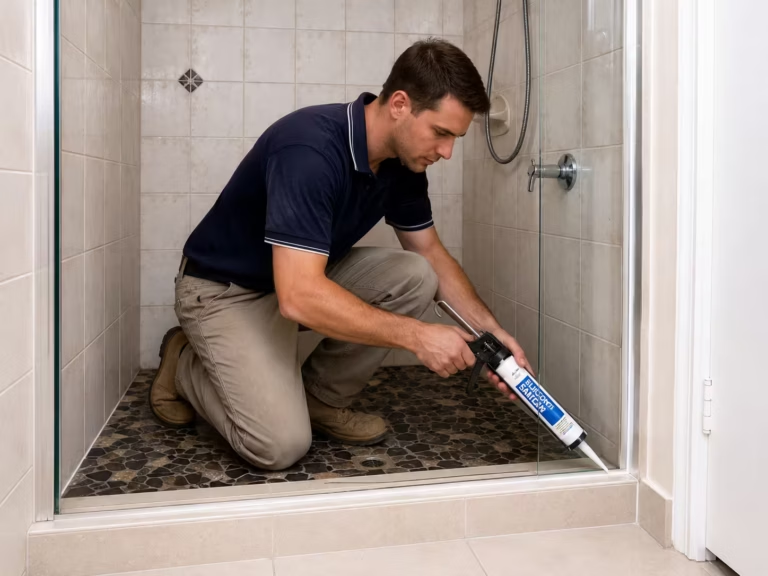
What it is: A tradie grinds out the old, cracked, or mouldy grout from between your tiles, and the perished silicone from the corners and joins, then replaces both with fresh material.
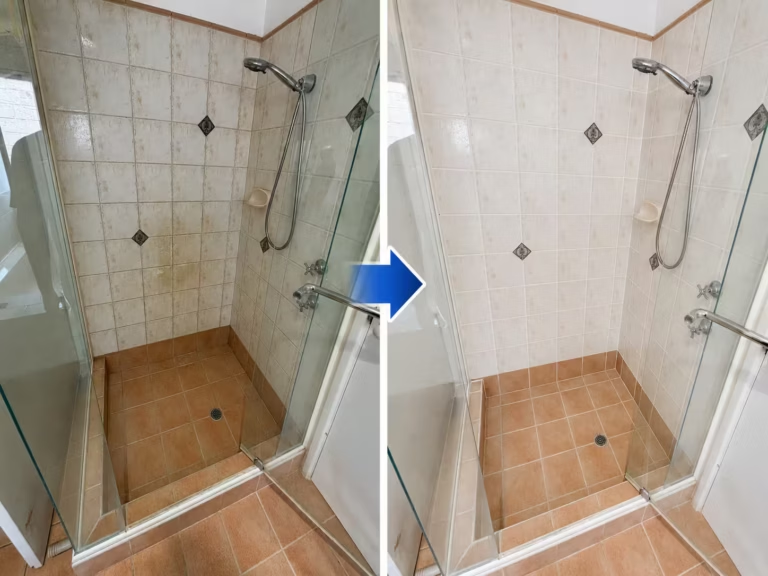
What it fixes: Surface-level problems. If your grout is crumbling, your silicone has gone black and peely, and the leak is fairly minor and recent, a quality regrout and re-silicone can genuinely sort it out. It also makes the shower look ten years younger, which is a nice bonus.
When it’s the right call:
- The grout is cracked, missing, or discoloured, but the tiles are solid and the leak is small.
- You’ve caught it early — there’s no major water damage to surrounding walls or floors yet.
- The waterproof membrane underneath is still doing its job.
The honest catch: Standard grout and silicone are consumables. They shrink, they crack, they harbour mould, and they eventually fail again — usually in three to five years. A regrout is a real fix, but it’s a fix with an expiry date. It’s like re-pointing the mortar on a brick wall: worth doing, but you’ll be back up the ladder eventually.
Surface Seal does re-grout and re-silicone work as a standalone service — so if that’s genuinely all your shower needs, that’s what we’ll tell you.
Option 2: Reseal (the epoxy approach)
What it is: Instead of just replacing the grout on the surface, a professional-grade epoxy is rolled into every grout line, join, and vulnerable point in the shower. The epoxy doesn’t sit on top like a silicone bead waiting to peel — it penetrates and bonds to the grout, tile backs, and substrate, becoming part of the structure.
What it fixes: The root cause of most leaks — failed waterproofing — without removing a single tile.
This is the bit that surprises people, so here’s the analogy that makes it click. A standard regrout is like putting a fresh bandage over a wound. An epoxy reseal is like the wound actually healing closed. One sits on the surface and will eventually lift; the other becomes part of the body and stays.
When it’s the right call:
- Your tiles are structurally sound (not broken or drummy) but the shower is leaking.
- You want a permanent fix, not another repair you’ll redo in a few years.
- You don’t want your bathroom torn apart, and you’d quite like to be using your shower again the day after tomorrow.
The honest pitch: Because the epoxy bonds to the substrate and doesn’t dry out, crack, or shrink like ordinary sealant, it lasts. That’s why it carries a 10-year warranty and a first-year money-back guarantee — you don’t put a decade-long promise on a product you expect to fail. Most jobs are done in a single visit and ready to use within 24–48 hours. No demolition, no skip bin on the verge for a fortnight, no showering at the neighbour’s.
This is the gap most people don’t know exists. They think the only options are “cheap patch that fails” or “expensive renovation that doesn’t.” There’s a third door, and this is it.
Option 3: Retile (the full renovation)
What it is: Exactly what it sounds like. The tiles come off, the old waterproof membrane is stripped back, a new membrane is laid, and the whole shower is tiled again from scratch.
What it fixes: Genuine structural failure — and it’s overkill for anything less.
When it’s the right call (and it sometimes genuinely is):
- Tiles are actually cracked, drummy, or falling off the wall.
- The waterproof membrane has comprehensively failed and the substrate behind it is rotten or compromised.
- You’re renovating the bathroom anyway and want a new look.
The honest warning: A full retile in Perth can run anywhere from $5,000 to well over $10,000, and it’ll leave you without a working bathroom for one to two weeks. That is a perfectly reasonable cost if you genuinely need it. The problem is how often it gets recommended when you don’t.
If a tradie looks at intact, undamaged tiles and immediately reaches for the retile quote, be suspicious. It’s the single most expensive option, and “the most expensive thing that would technically work” is not the same as “the thing you actually need.” A retile to fix a failed seal is like demolishing your kitchen because a tap was dripping.
The 30-second self-assessment
Stand in your bathroom and run through these honestly:
- Are your tiles cracked, loose, or do they sound hollow when you tap them? → If yes, you may genuinely be looking at a retile. If no, keep going.
- Is the grout cracked or the silicone perished, but everything else looks intact? → A reseal or regrout territory. Lean reseal if you want it to be the last time.
- Has the leak caused damage to walls, floors, or rooms next door? → The leak has been going a while. Get it assessed properly and quickly — the longer water sits, the more options narrow toward the expensive end.
- Have you already regrouted this shower in the last few years and it’s leaking again? → Stop patching it. The surface fix isn’t reaching the actual problem. This is exactly what a proper reseal is for.
The bottom line
Most leaking showers in Perth do not need a renovation. They need the actual failure point — the seal — fixed properly. The reason people end up overpaying is simple: they get advice from people who only sell one thing, so every problem mysteriously looks like the one thing that person sells.
The fix for that is information, which is what this article is for. Now you know the difference between a bandage, a healed wound, and a transplant — and you can spot which one you’re actually being sold.
If you’re not sure which category your shower falls into, you don’t have to guess. Send us a few photos of your shower — the tiles, the grout lines, the silicone, and any visible water damage — and we’ll give you an honest assessment. We’ll tell you what’s actually going on, what it’ll cost, and how long it’ll take. And if your situation genuinely needs a regrout instead of a reseal, or even a full retile, we’ll tell you that too. We’d rather lose a job than sell you the wrong one.
No obligation. No sales pressure. Just a straight answer.
Get Your Free Shower Assessment → or call +61 468 802 312.
Serving Perth and surrounds — from Joondalup to Mandurah. 10-year warranty. Money-back guarantee. Owner-operated.